









Can Your Air Conditioner Handle the Oman Heat? (A Health Check Guide)

Home » Blog » Can Your Air Conditioner Handle the Oman Heat? (A Health Check Guide)

Can Your Air Conditioner Handle the Oman Heat? (A Health Check Guide)

0

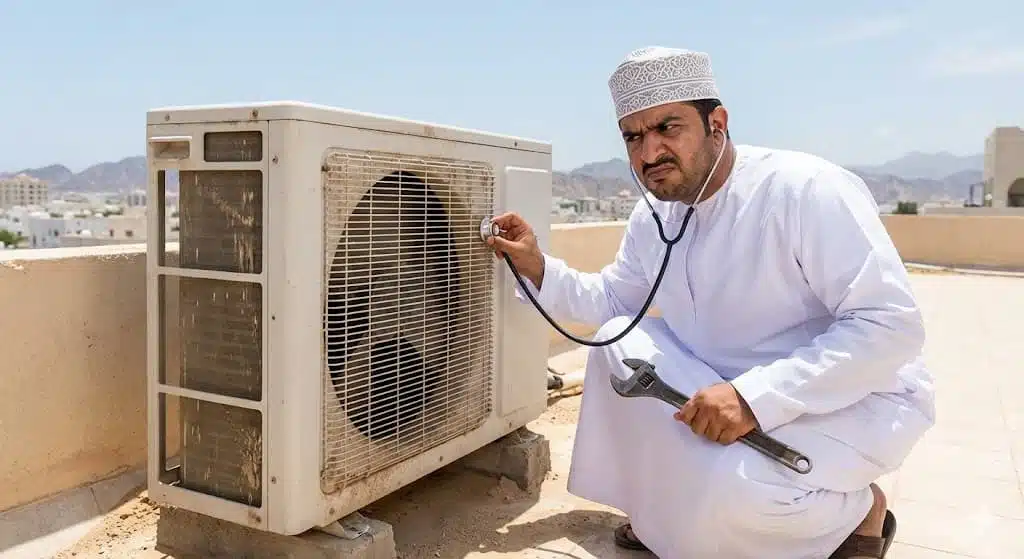
The summer sun in the Sultanate is unforgiving. When temperatures hit 45°C, your air conditioner isn’t just an appliance; it is your primary line of defense. But before the heat reaches its peak, you need to ask a critical question: Can your current system survive another season?

At Rubo Al Hail International Enterprise, we know that even the best machines have limits. As the leading HVAC wholesale dealer in Oman, we want to help you determine if your unit just needs a tune-up with quality spare parts, or if it is time to retire it.

Here is a detailed guide to assessing the health of your cooling system.

1. The Reality of Lifespan in the Gulf

While manufacturing standards suggest an AC unit can last 15-20 years, the reality in the Gulf region is different. The combination of extreme ambient heat, fine desert dust, and coastal humidity (salt corrosion) accelerates wear and tear.

  • The Benchmark: In Oman, a well-maintained unit typically performs efficiently for 10–12 years. Beyond this, electricity consumption usually spikes, and reliability drops.

2. Critical Red Flags (And What They Mean)

An AC unit rarely dies silently. It usually gives you warnings first. Here is how to interpret them and which parts might be failing:

A. Strange Noises

  • Buzzing: This often indicates an electrical issue. It could be a failing contactor or a weak capacitor struggling to start the compressor. These are affordable, easy-to-replace parts available at our showroom.
  • Squealing/Grinding: This is mechanical. It usually points to a dry fan motor bearing or a slipped belt. If heard from the outdoor unit, the fan motor might be seizing up due to dust ingress.
  • Hissing: A distinctive hissing sound usually means a refrigerant leak. This is serious and requires immediate attention to locate the leak and top up the gas.

B. The “Dirty Sock” Smell

  • The Cause: In our humid climate, mold and mildew can grow on the evaporator coils inside the indoor unit.
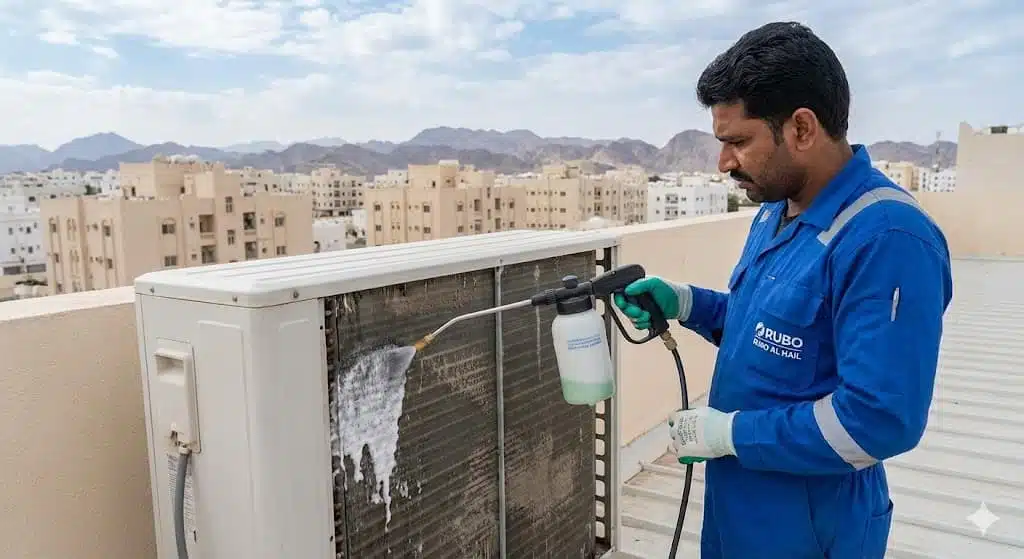
  • The Fix: This doesn’t mean the unit is dead. It usually needs a deep clean using professional A/C Chemical Coil Cleaners to strip away the biological buildup and improve air quality.

C. Short Cycling

  • The Symptom: The AC turns on, runs for 5 minutes, and turns off again without cooling the room.
  • The Cause: This could be an oversized unit, a dirty air filter restricting flow, or a faulty thermostat sensor.

3. Detective Work: How Old Is Your Unit?

Knowing the age of your system helps you decide whether to repair or replace.

  • Step 1: Locate the Data Plate. Look for a silver or white sticker on the side of the outdoor condenser or the indoor handler.
  • Step 2: Decode the Serial Number.
    • The “Week/Year” Format: Look for the first four digits. Often, 1205 means the 12th week of 2005.
    • The “Year/Month” Format: Sometimes the year is the first two digits (e.g., 08 for 2008).
    • Pro Tip: If the sticker is faded by the sun (common in Oman), check the compressor label inside the unit (requires a technician).

4. The Efficiency Factor: Standard vs. Inverter

If your unit is over 12 years old, it is likely running on old technology with a low EER (Energy Efficiency Ratio).

  • Old Tech (Fixed Speed): These units run at 100% power until the room is cold, then shut off. This “stop-start” cycle consumes massive amounts of electricity.
  • New Tech (Inverter/Variable Speed): Modern compressors vary their speed to match the cooling need. They run quieter, keep the temperature stable, and can reduce energy bills by up to 40%.
  • The Bottom Line: If your old unit is driving your electricity bill through the roof, replacing it might be cheaper than keeping it.

5. The Decision: Repair or Replace?

This is the big question. Here is our expert advice:

Repair It If:

  • The unit is under 10 years old.
  • The problem is a specific, replaceable component (e.g., a capacitor, fan motor, or thermostat).
  • The cost of the repair is less than 50% of the cost of a new machine.
  • The Strategy: Extend the life of your current unit by using high-quality replacement parts. As the source for A/C parts near Muscat, Rubo Al Hail stocks genuine electrical and mechanical spares that can breathe new life into an aging system.

Replace It If:

  • The unit is over 15 years old.
  • The compressor (the heart of the system) has failed.
  • The unit uses R22 gas (an older, phased-out refrigerant that is becoming expensive and hard to find).

Prepare for the Heat with Rubo Al Hail

Whether you decide to repair your trusty old unit or install a brand-new system, the quality of the parts you use determines your comfort.

Rubo Al Hail International Enterprise is here to support you with:

  • Maintenance Supplies: Filters, coil cleaners, and gas.
  • Repair Parts: Compressors, capacitors, motors, and copper coils.
  • Expert Advice: Guidance on the best solutions for the Oman climate.

Don’t let the heat win. Visit us today to ensure your AC is ready for the challenge.

Showroom Location: Al Baladiya St, Muscat, Oman Contact Us: +968 95076026 Browse Our Inventory: www.ruboalhail.com

Leave a Reply

Your email address will not be published. Required fields are marked *